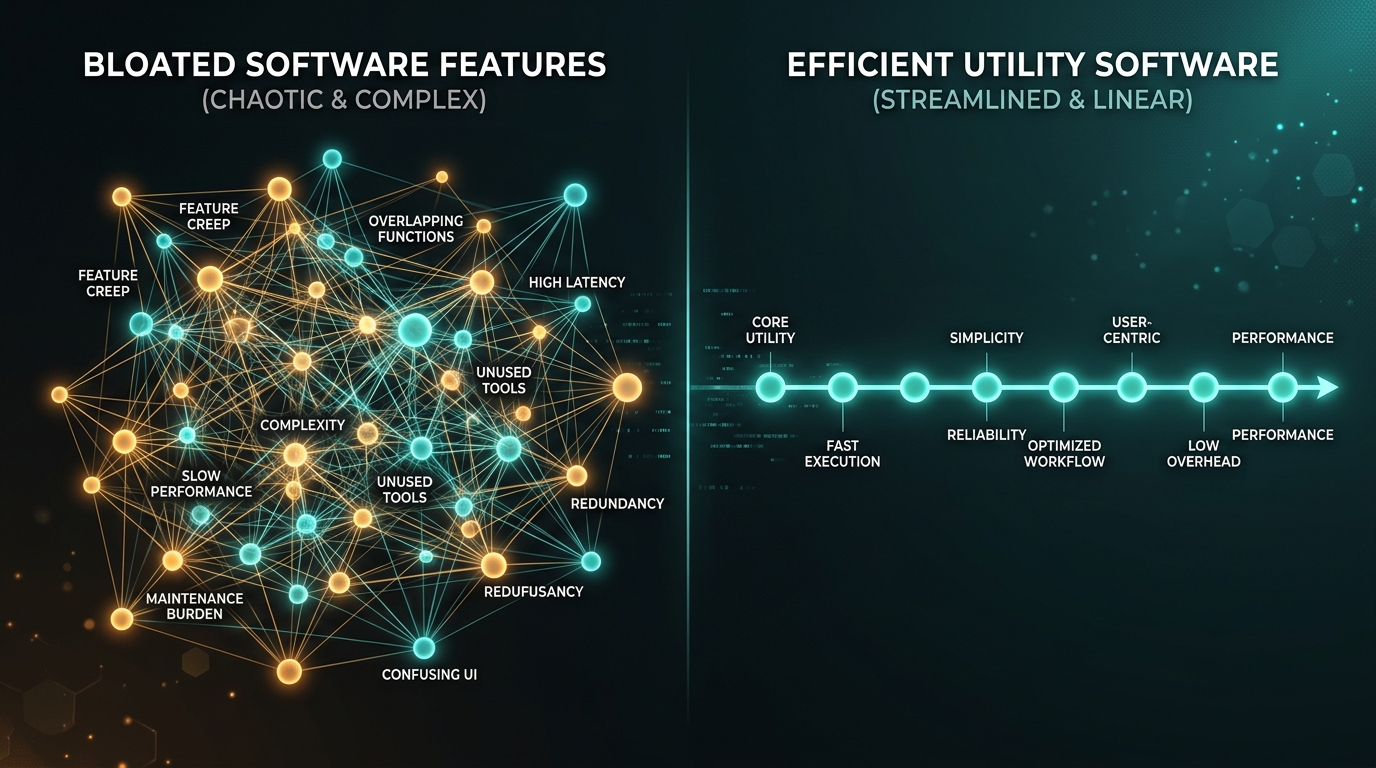
A sustainable mobile software roadmap prioritizes stable, user-centric utility over speculative feature expansion. At Codebaker, our long-term vision centers on solving immediate, high-friction tasks—like deploying second-line communications and digitizing paperwork—by favoring architectural reliability over the aggressive release cycles that currently dominate the industry.
Picture a real estate agent trying to secure a signed contract while standing in a property with terrible cellular reception. They open a bloated corporate application that attempts to load a heavy, predictive interface just to process a single page. The app stalls. Contrast this with a lightweight utility tool that opens instantly, uses the camera hardware efficiently, and saves the file locally until a reliable network connection is restored. This scenario perfectly illustrates the tension in modern software development: the gap between what developers want to build and what users actually need to survive their workday.
Analyze the Current State of Software Economics
The global software development market reached approximately $659 billion in 2023 and continues to grow at a rapid pace as businesses digitize. In a race to capture a slice of this massive pie, many technology firms have adopted a “more is better” philosophy.
This approach often results in roadmaps dictated by market pressure rather than user necessity. When reviewing corporate communication stacks, I frequently observe organizations paying for massive enterprise suites when their users only utilize a fraction of the capabilities. We must compare this prevalent model against a more disciplined approach.
Comparison: Feature Factory vs. Core Utility
The Feature Factory Approach:
In this model, success is measured by the sheer volume of new capabilities shipped per quarter. Roadmaps are reactive, chasing the latest technological trends. The pros are short-term market visibility and easy talking points for sales teams. The cons are severe: code bloat, degraded performance on older hardware, and a confusing user experience. Users are forced to sift through complex menus just to execute a basic text or call.
The Core Utility Approach (Codebaker's Vision):
Success is measured by reliability, speed, and hardware efficiency. The roadmap focuses on recurring user jobs. The pros include high user retention, low crash rates, and intuitive interfaces. The only real con is that utility apps rarely make flashy tech headlines—they simply do the work quietly in the background.
The Reality of Modern Code Generation
To understand where mobile development is heading, we have to look at how software is currently being written. There is immense pressure to ship faster, often relying heavily on automated coding assistants to generate bulk features.
Recent industry data regarding "vibe coding" trends provides a sobering reality check. While a vast majority of US developers report using automated tools, the actual outcomes are often counterintuitive. Studies have shown that developers using these tools can actually be slower at completing complex tasks due to the time required to debug AI-generated errors. Unsurprisingly, developer favorability toward these tools has fluctuated as the difficulty of maintaining auto-generated code becomes apparent.
At Codebaker, we look at this as validation of our engineering philosophy. My colleague Onur Başaran covered this dynamic perfectly in his recent post detailing how a mobile app roadmap must start with recurring user jobs, rather than engineering wish lists. We refuse to compromise our VoIP architecture or document processing pipelines with bloated, unverified code simply to hit an arbitrary release deadline.
Compare Hardware Demands Across the User Base
A central pillar of our product vision is acknowledging the reality of device fragmentation. A utility app is only as good as its performance on the device a person actually owns.
Consider the varying demands of Apple's ecosystem alone. If a company strictly optimizes its processing for the camera sensors and neural engine of an iPhone 16 Pro, they are actively alienating a massive segment of the workforce. Our development roadmap ensures that whether you are using a base model iPhone 14, a larger iPhone 14 Plus, or keeping an older iPhone 11 in service, the core functionality remains unimpaired.
This hardware parity extends to network conditions. I spend hours analyzing VoIP packet loss under varying network conditions. An effective communication app must maintain voice clarity whether routing over stable corporate fiber or a congested T-Mobile cell tower in a suburban neighborhood. Our apps include failsafes specifically designed for these unpredictable environments.
Evaluate Tools Based on Practical Application
When executing on our company vision, we structure our applications to solve distinct, easily identifiable problems. Let's compare how our specific utilities address these needs.
Evaluating Document Digitization
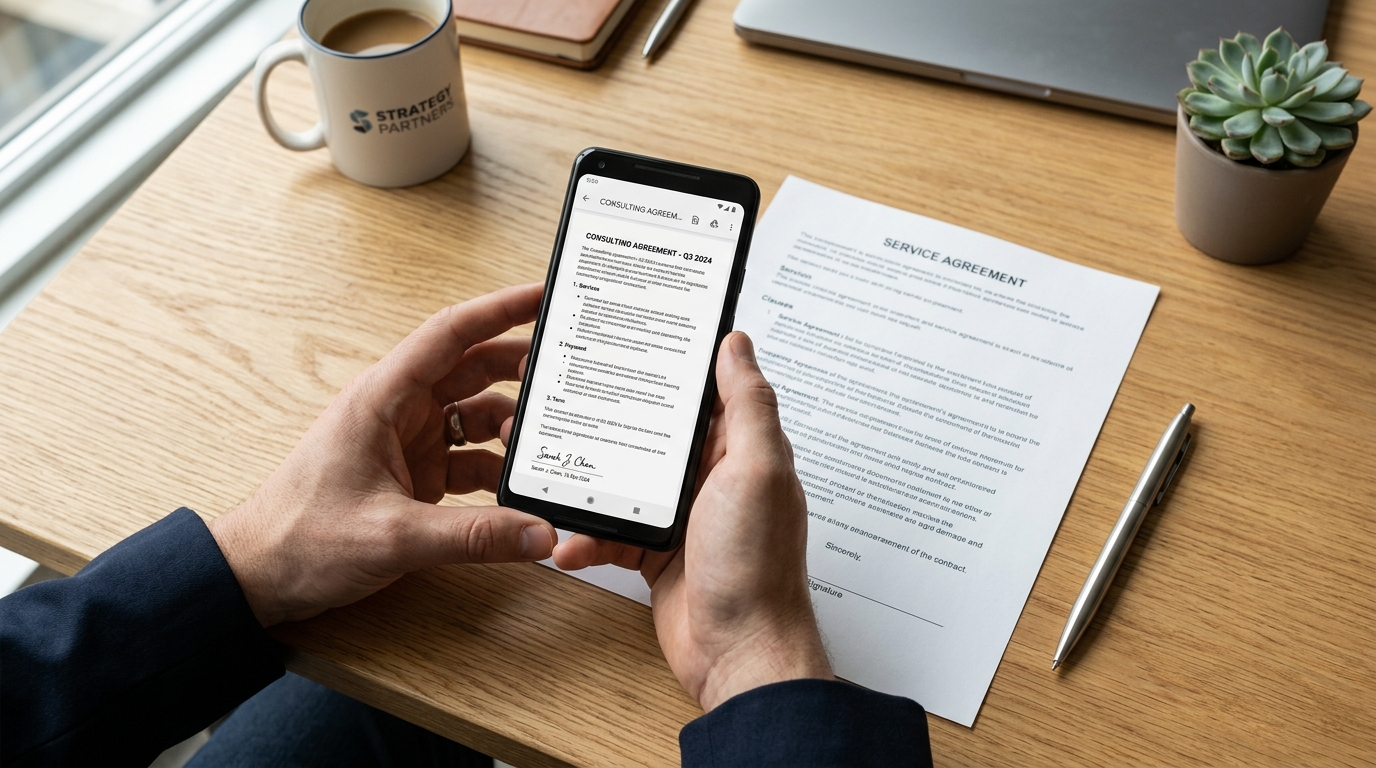
The traditional approach to handling physical paperwork involves maintaining expensive, stationary office equipment. The modern alternative relies on the high-resolution lens already sitting in your pocket.
For individuals processing contracts, receipts, or legal docs, we developed Scan Cam: Docs PDF Scanner App. The choice between a physical scanner and a mobile solution comes down to agility. A stationary scanner provides bulk processing power, but Scan Cam delivers immediate capture and conversion at the point of action. By utilizing sophisticated edge-detection algorithms, the app isolates the document from its background, corrects perspective distortion, and generates a clean PDF in seconds.
Evaluating Professional Communication Needs
In my specialized work with communication technology, the most common request I receive is from professionals wanting to separate their personal and business lives without carrying two physical devices.
You essentially have two choices when dealing with professional mobile communication:
- The Hardware Route: Purchasing a second phone with a dedicated SIM card. This provides complete separation but doubles your hardware costs and forces you to carry two devices.
- The Virtual Route: Deploying a specialized utility app on your existing device. We built our Text &Call Second Phone Number service to fill this exact gap. It operates entirely as a virtual number service over VoIP protocols, bypassing the need for physical SIM infrastructure.
We purposefully built this to function cleanly as an active communication line. It is a tool for initiating a secure text exchange or professional call—not a spam filtering or caller ID blocking utility.

Define the Future by Simplifying the Present
Industry trends suggest a major shift in software engineering: development is moving away from basic assistance toward coordinated, long-running systems. While this shift promises productivity gains, it also requires a security-first architecture.
This is exactly how we view the future of Codebaker. As underlying systems become more complex, the user-facing application must become simpler, faster, and more secure. We do not intend to pack our software with confusing AI chatbots or unnecessary social features. Our roadmap is firmly rooted in the belief that utility software should respect the user’s time and privacy.
By comparing the chaotic, feature-heavy trends of the broader market against a disciplined, problem-solving approach, the path forward becomes clear. We will continue engineering solutions that make everyday operations smoother, ensuring that our technical decisions consistently map back to the real, immediate needs of our users.